



Most of your financial choices, from small gifts to long-term planning, determine how effectively you advance Kingdom work; this post explains biblical principles of stewardship, practical strategies for aligning resources with mission, and metrics you can use to evaluate eternal impact so you can invest consistently, sacrificially, and wisely.
Unlocking the Parable: Stewardship Principles from Matthew 25:14–30
You read a concise framework for stewardship in Matthew 25:14–30: three servants receive 5, 2, and 1 talents; two invest and double their gifts while one buries his and returns only the original. That sequence models delegated responsibility, expected initiative, and measurable return—principles you can map directly onto budgeting, volunteer deployment, and program evaluation in kingdom work.
The Master’s Expectations: Talents and Accountability
You are given resources as delegated authority, not personal property; the master expected profit by his return, shown when 5 became 10 and 2 became 4. Accountability means you will report results, justify choices, and accept oversight—so proactive risk-taking aligned with the master’s purposes wins commendation, while passive preservation undermines trust and future delegation.
The Consequences of Inaction: Lessons in Faithfulness
The third servant’s fear led him to bury his talent and he suffered loss of reward and standing, illustrating that inaction has moral and practical consequences. In ministry terms, leaving gifts unused stalls mission, erodes credibility with donors and partners, and prevents the multiplication of impact the kingdom expects.
Consider a congregation that left a $2,000 outreach fund idle; deploying $500 into a partner with a 4:1 matching opportunity could have generated $2,500 in services, showing how inactivity forfeits multiplier effects. The parable’s penalty—being cast into “outer darkness” and losing stewardship—signals both reputational and functional costs: you risk diminished influence, fewer resources, and exclusion from future opportunities to serve.

From Currency to Kingdom: Transforming Earthly Money into Eternal Investments
You transform ordinary dollars into eternal investments by directing funds toward multiplying activities—tithing 10% for worship and local ministry, funding a $100 microloan that lifts an entrepreneur, or sponsoring a child for $30/month to fund education. Prioritize seed capital for church plants or discipleship programs where $3,000 often covers startup costs, and treat giving as strategic allocation, not sporadic charity.
The Mechanism of Eternal Impact: How Financial Choices Matter
You create lasting impact through leverage, compounding, and relational multiplication: a $500 grant can catalyze a microenterprise employing 3–5 people; a $2,000 training cohort can equip 50 leaders who reach hundreds. Measure conversions, jobs created, and discipleship cycles so each dollar’s ripple—social, spiritual, and economic—becomes visible and scalable.
Aligning Resources with God’s Purpose: The Heart of Stewardship
You align resources with God’s purpose by mapping your passions, gifts, and financial capacity to measurable mission outcomes—budgeting a baseline tithe plus an impact fund (5–15% of income) for targeted projects. Choose ministries with clear KPIs—people discipled, jobs created, children educated—and favor scalable approaches like microfinance or church planting that convert one-time gifts into ongoing kingdom work.
Begin with a financial audit listing income, fixed commitments, and discretionary funds, then set allocations—10% tithe, 5–15% impact giving, 10–20% savings—tailored to your season. Use donor-advised funds or charitable remainder trusts for larger gifts, and platforms like Kiva or local microfinance for loans of $50–$500 that multiply returns in livelihoods. Insist on quarterly reporting and KPIs (new small businesses launched, number baptized, children in school), review outcomes annually, and reallocate toward interventions delivering the highest spiritual and social ROI.
The Cost-Benefit Analysis: A Cup of Coffee vs. Feeding a Child
You face small daily choices that add up: a $3–$5 coffee each morning equates to roughly $90–$150 a month, while many feeding programs deliver meals for $0.25–$0.50 each. Redirecting a week’s worth of lattes can fund dozens of meals, a month’s worth can support school feeding for a child, and a year’s reallocation might underwrite community nutrition projects that break cycles of hunger and absenteeism.
The Daily Trade-off: Personal Choices in Context
You can map your habits to impact: a $4 daily coffee costs about $1,460 yearly, which at $0.50 per meal equals 2,920 meals. Choosing to skip three coffees a week saves roughly $624 a year—enough to sponsor school meals and supplies for a child or seed a small income-generating activity in many developing contexts.
The Ripple Effect: Long-term Benefits of Generosity
You unlock compounding benefits when dollars fund imperatives: school feeding and basic health interventions improve attendance and cognitive performance, and World Bank data show each additional year of schooling raises future earnings by roughly 8–10%. A modest, consistent gift can transition a child from chronic hunger to stable schooling, altering lifetime prospects.
You can see this in program patterns: a $20 monthly commitment to a community program—for example, $240 annually—often covers school meals, hygiene supplies, or partial tuition in lower-income regions, producing measurable gains in attendance and retention. Those children are likelier to enter the workforce with stronger skills, households reinvest earnings, and local economies gain steady human-capital returns that amplify your initial gift over decades.
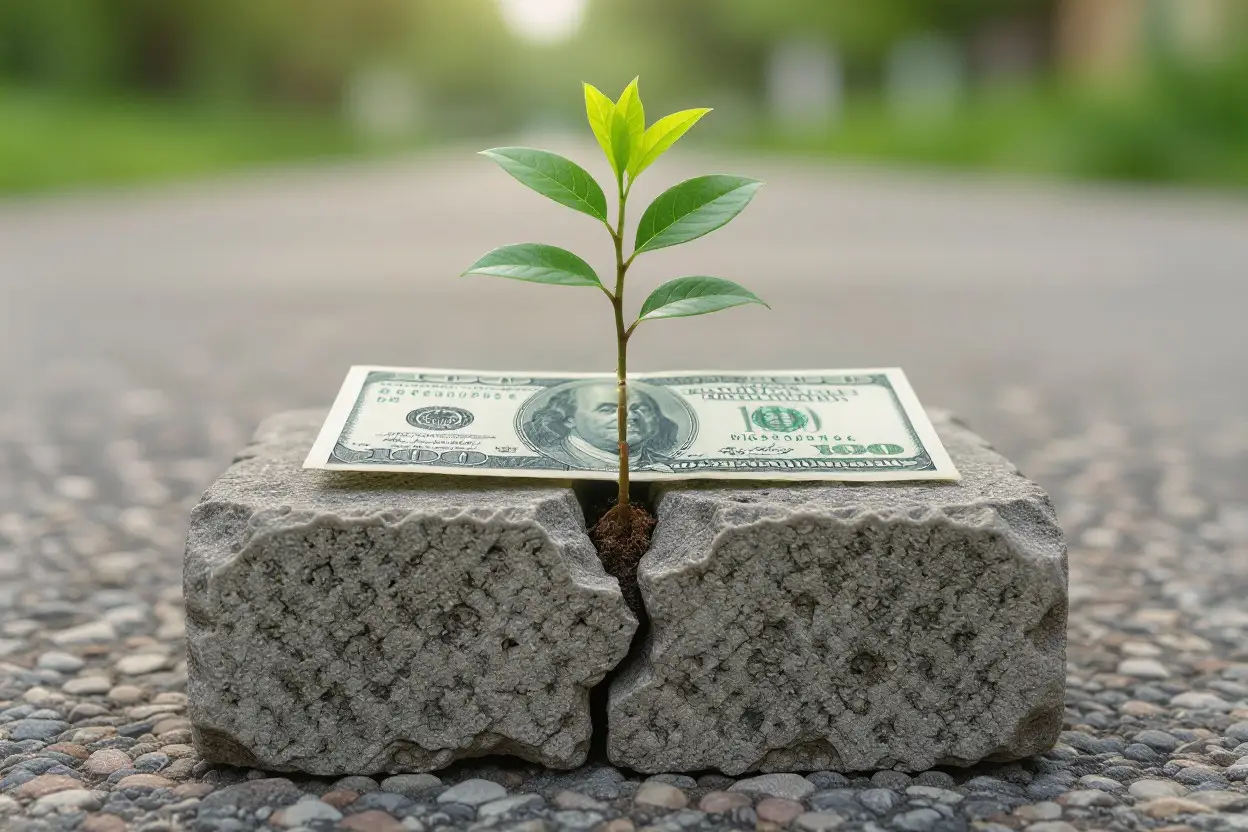
The Concrete Impact: Measuring Change Per Dollar
You can trace how a single dollar becomes concrete change: $3–4 typically buys a long-lasting insecticidal net, about $0.50 funds a school deworming treatment, $30 connects one person to safe water, and $1 can provide up to ten meals through food-bank networks. Comparing these unit costs helps you weigh immediate relief against long-term outcomes and choose where your dollar achieves the greatest sustained return in health, nutrition, or economic opportunity.
Statistics That Matter: Understanding the Power of One Dollar
Evaluators use metrics like cost per beneficiary, cost per life saved, and cost per DALY averted to translate dollars into impact. You should note that deworming often costs under $0.50 per treatment, bed nets land around $2–$4 each, and clean-water projects run near $30 per person. These figures let you prioritize interventions that deliver the most measurable benefit for each dollar you allocate.
Real-world Examples: Organizations Making a Difference
Against Malaria Foundation procures and distributes insecticidal nets at roughly $3 apiece, Evidence Action’s Deworm the World delivers school treatments for about $0.50 each, charity: water targets roughly $30 per person for clean-water access, and Feeding America reports $1 can yield up to ten meals through its food-bank network. Your dollar’s effect depends on program design, procurement efficiency, and delivery scale.
AMF lowers per-net costs through bulk purchasing and targeting high-transmission zones to maximize cases averted per dollar; Evidence Action leverages school systems to reach millions at minimal marginal cost; charity: water combines grants and local partnerships to keep per-person capital costs near $30; Kiva’s $25 minimum loans then rotate as repayments come back, letting your initial contribution fund multiple entrepreneurs over time. Examine whether programs scale, recycle funds, and report unit costs to judge how far your dollar will go.
Your Role in the Kingdom Economy: A Call-to-Action
You can turn routine spending into kingdom impact by allocating a defined portion of your income—start with 1% and scale toward 10%—and mobilizing others to do the same; a single dollar a day equals $365 a year, and if 1,000 people commit that amount you generate $365,000 annually to fund church plants, feeding programs, or discipleship initiatives that multiply influence beyond immediate dollars.
Steps to Becoming a Good Steward of God’s Resources
Begin with a 90-day financial audit to map income and expenses, set a giving percentage you can sustain (1–10%), create a monthly line item in your budget for generosity, choose a mix of immediate aid and multiplying investments (local outreach, microloans, training), and review impact quarterly using simple metrics: number served, cost per beneficiary, and sustainability projections.
Joining the Movement: Engaging with Kingdom Work
Plug into existing channels—your church’s outreach teams, vetted NGOs, microfinance platforms, or a neighborhood initiative—by committing time or money, for example 4 hours weekly or $20 monthly; a congregation mobilizing 200 volunteers at an average of 40 hours/year generates 8,000 service hours that can sustain multiple programs simultaneously.
Vet opportunities by requesting clear metrics (people served, cost per person, retention rates) and start with a three-month pilot: commit a modest monthly gift (e.g., $50) or limited volunteer hours, track outcomes, and scale when you see measurable spiritual and social return; coordinate with a cohort of 10 donors to pool resources—$50 each becomes $500 monthly to fund a focused project with visible results.
Conclusion
Upon reflecting on a dollar’s potential, you see how intentional stewardship in kingdom work extends influence beyond time; when you allocate resources prayerfully, prioritize service, and steward with transparency, your gifts multiply spiritual fruit and sustain ministries, training, and outreach. Your consistent generosity and wise oversight create a legacy that blesses communities now and invests in eternal values, shaping discipleship and expanding God’s work through faithful financial stewardship.